
Film Review: Amarcord (1973)
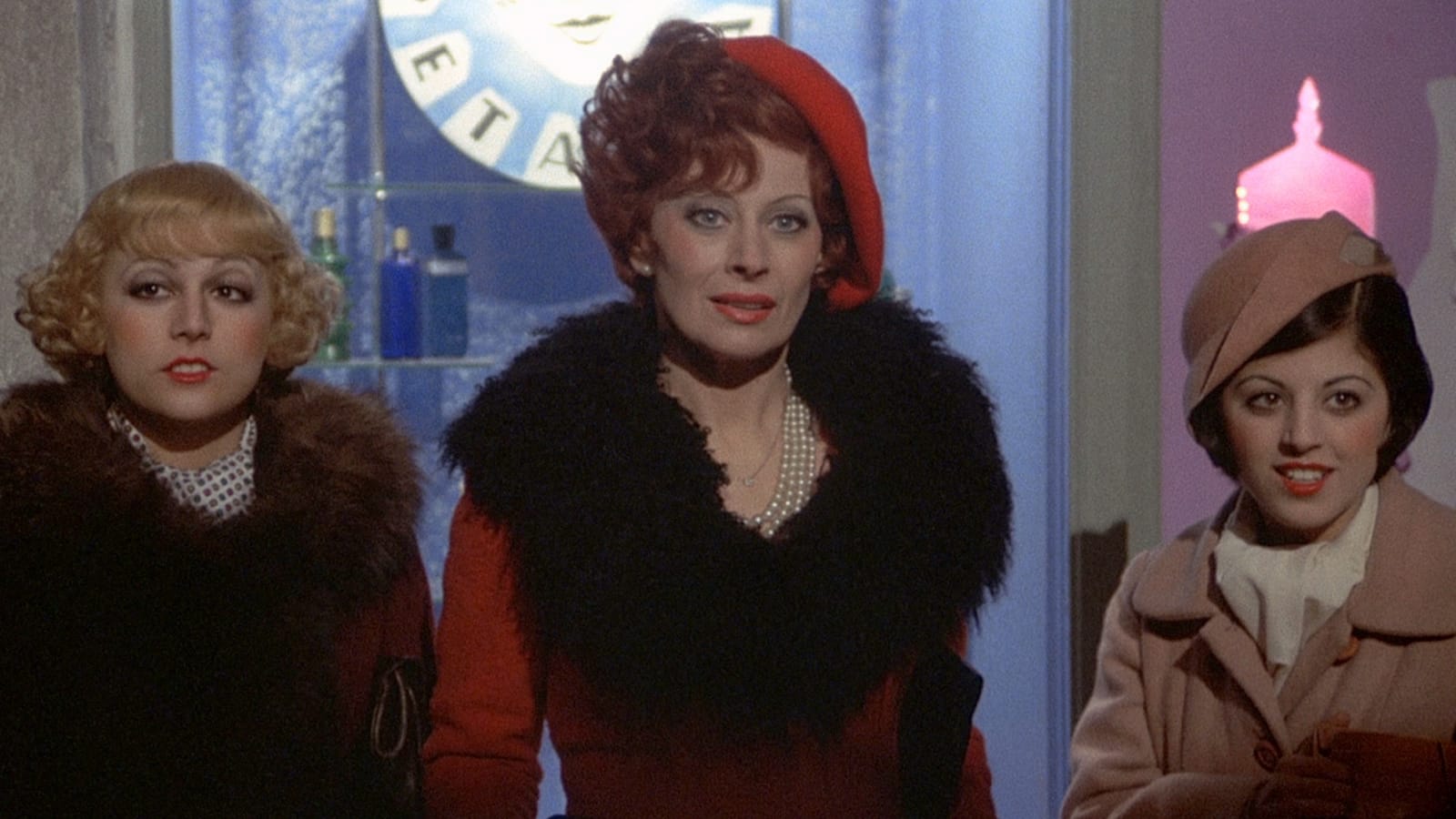
There’s something unsettling about Fellini’s semi-autobiographical film Amarcord that I can’t quite shake. Under normal circumstances, a film that gives me these kinds of feelings would earn extra marks, but Amarcord is different. What troubles me is not necessarily the film itself, mind you, but instead its fond remembrances of a cheery life under Italian fascism. As the U.S. slides increasingly further into its own brand of modern authoritarianism, I find myself appalled at the idea that anyone, 30 or 40 years from now, could possibly make a film that looks back on these times with anything other than horror. Of course, this is no fault of Fellini or Amarcord (the film is over 50 years old, after all, and Fellini has been dead for over 30), but still I can’t rid myself the creepy feeling it gives me.
But Amarcord (Italian slang for “I remember”) isn’t meant to be taken literally. The people and places depicted are meant to be seen and felt as Fellini’s exaggerated memories (or as other critics have pointed out, memories of memories), making everything onscreen about as historically and autobiographically reliable as what I remember from my trip to Disney World as a third grader in 1986. As a youngster in the early days of Italy’s fascist experiment, it’s no wonder a pint sized Fellini would remember the glamour of a local hairdresser or the bosom of the town tobacco seller (Magali Noël and Maria Antonietta Beluzzi) more than the politics of the time, but I still can’t square it all in my mind.
While watching, I found my mind continually wandering back to an exchange that takes place in the Mike Nichols production of Joseph Heller’s Catch-22 (it probably takes place in the book too, but I haven’t read it in decades). The conversation in question is had between young Nately (Art Garfunkel) and a man credited only as “Old Man in Whorehouse” (Marcel Dalio). In it, the old man proudly states, “I was a fascist when Mussolini was on top. Now that he has been deposed, I am anti-fascist. When the Germans were here, I was fanatically pro-German. Now I’m fanatically pro-American. You’ll find no more loyal partisan in all of Italy than myself.”
The conversation continues (with odd bits of ironic comedy thrown in that mesh nicely with the overall tone of the story), but this particular passage has always struck me as self-defeating and depressing. Amarcord, for all its color, bluster, chaos, and exhilaration, gives me the same feeling. And while I would never say that Amarcord is a “bad” movie, or that Fellini should have made it any different than he did, I can’t help but feel off-put by its characters’ casual acceptance of fascism.
Or maybe I’m a hypocrite. It can be easily argued — and easily accepted by me personally — that the late ’80s (the era in which I was the same age as Fellini was when Amarcord takes place) was when America’s middle class and unions began taking real hits, thus allowing the circumstances that led to the corporate capture of political parties, the rise of tech billionaires, and the complete eradication of environmental safety nets that got us where we are today. But, hey, that trip to Disney World was awesome.

Italy • 1973 • 123 minutes • Color • 1.85:1 • Italian • Spine #4
Criterion Special Features Include
- Restored high-definition digital transfer, with uncompressed monaural soundtrack
- Audio commentary by film scholars Peter Brunette and Frank Burke
- American release trailer
- Deleted scene
- Fellini’s Homecoming, a forty-five-minute documentary on the complicated relationship between the celebrated director, his hometown, and his past
- Interview with star Magali Noël
- Fellini’s drawings of characters in the film
- Felliniana, a presentation of ephemera devoted to Amarcord, from the collection of Don Young
- Archival audio interviews of Fellini and his friends and family, by critic Gideon Bachmann
- Restoration demonstration
- Optional English-dubbed soundtrack
- PLUS: An essay by scholar Sam Rohdie, author of Fellini Lexicon, and Fellini’s 1967 essay “My Rimini”
