
Film Review: The Handmaiden (2016)
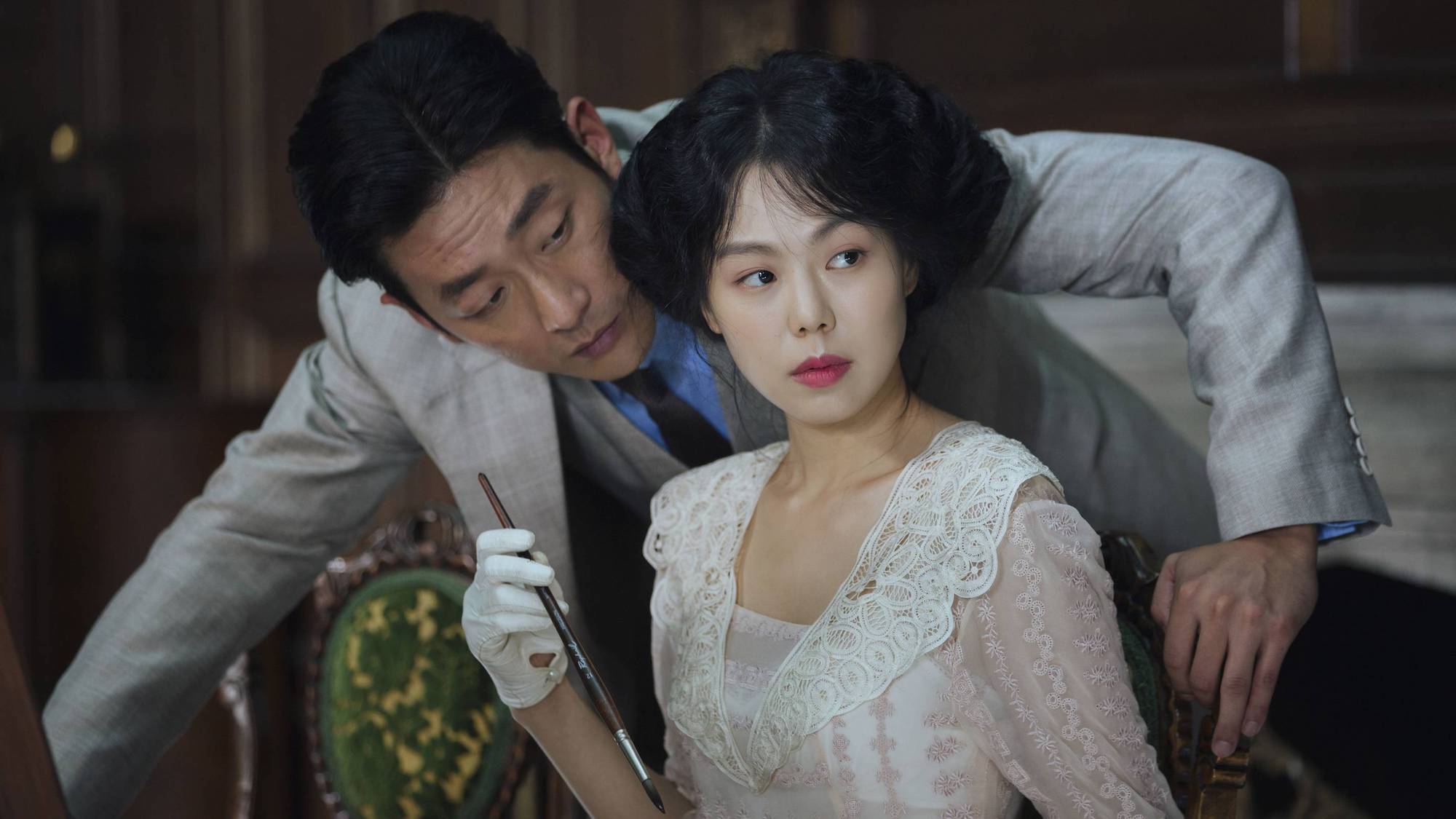
I’ve seen The Handmaiden twice now, and I’ll be damned if I don’t already want to watch it again. Park Chan-wook’s sprawling and detailed epic walks a fine line between beautifully executed artistic expression and shocking yet unashamed vulgarity but somehow, these two extremes blend into one of the most entertaining and deeply complex movies of the century so far. What Park has accomplished is nothing short of mystifying in every regard, despite – or perhaps because of – its likelihood to repeatedly offend casual moviegoers. His sometimes disturbing yet always weirdly tender combination of affection and abhorrence is astounding – so much so that in equal parts, The Handmaiden will have you covering your eyes and giggling with gleeful delight.
Based on the 2002 novel Fingersmith by Sarah Waters, The Handmaiden weaves between three distinct perspectives of the same series of events that take place in a sprawling and architecturally confusing manor owned by a Korean gold magnate. However, where Fingersmith is set amongst the confines of the Victorian era English elite as seen through the eyes of Dickensian criminals, Park’s film utilizes the Japanese occupation of Korea in the 1930s to set the stage for his crimes and abundant deceptions.
This change of scenery – aside from making sense from a strictly practical level (Park is from Korea, after all) – is far from benign, though. Where Victorian England offers plenty of opportunities to examine class and gender roles, there’s something about the looming specter of war – not to mention unspoken but hovering notions of national betrayal and collaboration with one’s occupiers – that elevates The Handmaiden to extra heights.
These surplus bits of anger and contempt bubbling beneath the film’s surface, while understated, create a certain kind of fatalism that, perhaps unknowingly, informs each character’s changing motivations. Self preservation is a powerful enough incentive in times of peace, but with war on the horizon, desperation can easily manifest as retribution against wrongs committed by those in power against those with none. And while The Handmaiden makes no overt political statements about class, collaboration, or the capitalist nature of war, its subtext is overflowing with discourse about them.
Crime, desire, horror, and madness drive this story of con artists, collaborators, and captivity headlong into increasingly shocking destinations, but it’s Park’s casting and set pieces that are the real engines. The film begins as a young grifter named Sook-hee (Kim Tae-ri) enters into a plot with Fujiwara (Ha Jun-woo), a young and dashing criminal with a big con up his sleeve. Sook-hee is to infiltrate the house of Kouzuki (Cho Jin-woong), a rich industrialist and Japanese collaborator, and set herself up as the maid to the beautiful, young, and slightly unhinged Hideko (Kim Min-hee). The plan is to get Hideko to marry Fujiwara and thus steal Kouzuki’s fortune.
Naturally, things go awry – but not in the typical and predictable long-con fashion that often plagues movies featuring self assured swindlers. Because of the film’s non-linear three-part structure, each aspect of the con can be seen from multiple angles, giving each beat its own changing perspective. The results are some of the most duplicitous and unexpected twists you’re likely to find – and that they’re as devious and mean-spirited as they come, makes each turn harder to spot and therefore that much more startling and entertaining when they are finally revealed.
But possibly the most memorable aspect of The Handmaiden is its graphic depiction of sex. While the explicit nature of some of its more notorious scenes may offend those with more sensitive sensibilities, Park’s characters pursue their desires in an almost comically naive way. There’s an innocence to their explorations that betrays typical cinematic steaminess, leaving in its wake the awkwardness of a first kiss rather than bawdy hedonism. Park’s sex scenes are certainly racy, of that there is no denying, but they aren’t exactly vulgar, despite certain stuffy reactions to them.
However, this does not mean that The Handmaiden is free of vulgarity, obscenity, or pure old-fashioned smut. As it happens, the film’s entire backdrop and at least half of the characters’ motivations are steeped in the stuff. Lurking in the background of The Handmaiden is a secretive cabal of perverts who gather to hear readings of erotic stories, which are collected in a rare and valuable library within the manor. But, more disturbing than the collection itself are the circumstances under which they are read – for it is here that we uncover many of the film’s secrets. It’s these rather benign scenes that give The Handmaiden its true sense of impropriety (or at least it should, if you’re not hung up on the more explicitly sexual ones) because they reveal not only the true depths to which some of the characters are capable of lowering themselves, but also the hell some of them are forced to live in.
The Handmaiden ends with a rather memorable confrontation in the bowels of the manor involving a battle of wits and an incredibly grotesque and jolting (but deliciously grin-worthy) third party before heading off to sea with the long con’s ultimate winners. And just for good measure, Park throws in just one more spicy bit of lewdness, just in case you need a reminder of the naughty wonders you’ve just experienced.

