
Film Review: Mirror (1975)
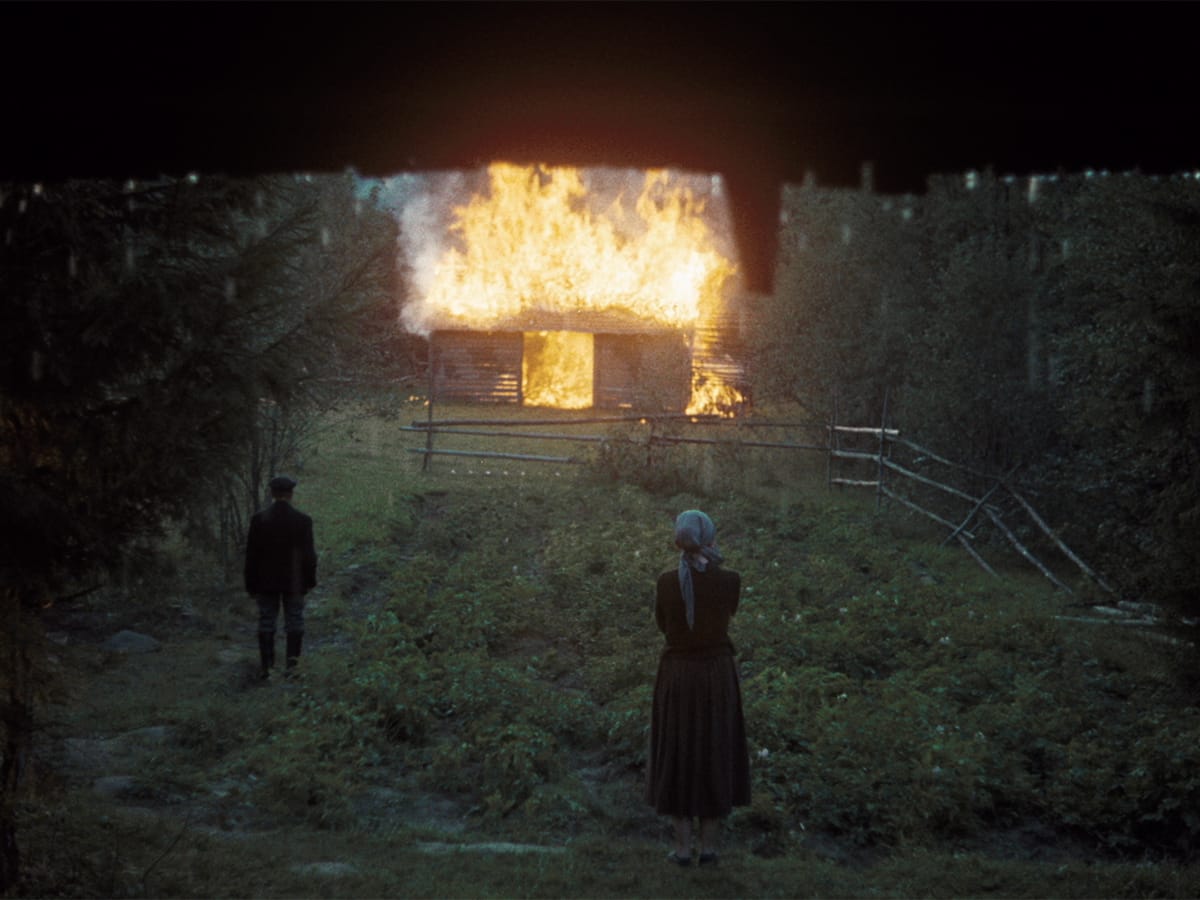
To put it simply, Mirror is one of the most beautiful films I have ever seen. That oversimplification is both honest and a complete injustice all at once. To describe in words what Tarkovsky has accomplished seems a somewhat pointless endeavor, as his mesmerizing imagery speaks for itself, but, here’s an attempt nonetheless.
If you’ve never seen a Tarkovsky film, don’t hesitate, go see one now. It doesn’t matter which one. The care, attention to detail, and artistic vision present in his movies are both difficult to explain, and nearly unmatched in the history of the medium. His films are full of wonder, mysticism, history, and poetry. It’s this last one, poetry, that strikes me most about Mirror.
It’s safe to say that I’m no poet, and I find myself wishing that I understood poetry better. To be honest, I have a hard time with the stuff. I do better with it if it’s recited to me, but when I read it on the page, its meaning is often lost on me. It’s a flaw that I’m striving to rectify. But, poetry, to me, is what Mirror most closely resembles. It’s a form of visual poetry that speaks to me in a language that I understand much better than the printed version.
With no direct narrative, Mirror is comprised of the memories of a dying poet, jumping back and forth in time with abandon. It’s a near stream of consciousness flow of memories that takes us to an assortment of points in 20th century Russia. I say ‘nearly’ stream of consciousness because there’s nothing ‘nearly’ about Tarkovsky’s work. Everything is very deliberate, and very carefully planned. But, the film plays like a dream, jumping at will from one moment to the next, and from black and white to color (which is likely to confound viewers even more).
The lack of narrative logic can be off-putting, but the beauty and magic of the whole thing is more than enough to keep you very well engaged. It’s best to not try to put the pieces together but to simply let the images wash over you. Mirror is a film you feel, more than one you enjoy. That’s not to say that it isn’t enjoyable, because it is. It’s an extremely rewarding and enriching piece of cinema.
Tarkovsky’s aesthetic is so captivating that they often hide the metaphysical themes and science fiction conventions that inhabit his worlds. Is that woman levitating? Why is it raining inside the house? Was that old woman a ghost? If not, why did she vanish? Is something about to come out of that bush? The wind suggests so, but I don’t see anything. These elements, and many more like them, are both beautiful to look at, and wonderful to contemplate.
Mirror is a grand example of what cinema is capable of. It defies logic and is yet somehow grounded in a dream logic that everyone can understand, simply because we all dream. We also all remember, and that our memories change, fade, and distort over time is maybe what’s central to understanding the meaning of the film.

Soviet Union • 1975 • 106 minutes • Black & White/Clor • 1.37:1 • Russian • Spine #1084
Criterion Special Features Include
- New 2K digital restoration, with uncompressed monaural soundtrack
- Andrei Tarkovsky: A Cinema Prayer, a 2019 documentary about the director by his son Andrei A. Tarkovsky
- The Dream in the Mirror, a new documentary by Louise Milne and Seán Martin
- New interview with composer Eduard Artemyev
- Islands: Georgy Rerberg, a 2007 documentary about the cinematographer
- Archival interviews with Tarkovsky and screenwriter Alexander Misharin
- New English subtitle translation
- PLUS: An essay by critic Carmen Gray and, for the Blu-ray, the 1968 film proposal and literary script by Tarkovsky and Misharin that they ultimately developed into Mirror
