
Film Review: Burning (2018)
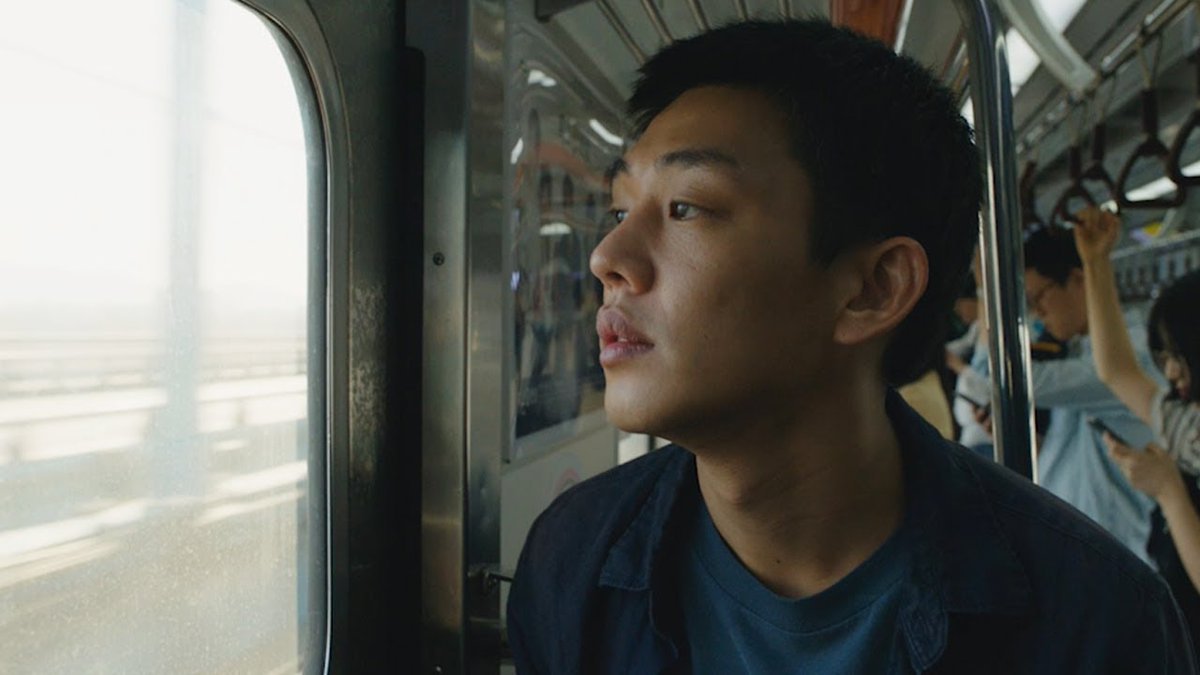
South Korean director Lee Chang-dong’s new film Burning never really tells us anything. There are plenty of clues and conjecture, but we can’t know for sure because the picture is always incomplete. We think we know – in fact we’re sure of it – but how can we be certain? This determination may sound more like a negative, but I assure you it isn’t. Burning takes us on a journey with far-reaching implications about the male psyche and how masculine insecurities can disguise themselves as noble deeds.
I’ll get right to it. The mystery at the core of Burning is a device to explore toxic masculinity, entitlement, jealousy, and men’s desire to own women physically and emotionally. It’s all very subtle and cleverly hidden within a dark mystery, but it’s there – written out between the lines. One day, roustabout and aspiring novelist Lee Jong-su (Yoo Ah-in) randomly runs into a former female schoolmate named Shin Hae-mi (Jeon Jong-seo). After the encounter, Jong-su, having clearly become infatuated with the beautiful young Hae-mi, agrees to feed her unseen cat while she’s away on a trip to Africa. To his surprise upon her return, she has a new man with her – Ben (Steven Yeun), a handsome, rich playboy.
The seeds of a love triangle are sown, but that’s not exactly how it plays out. The exact nature of the relationship between Hae-mi and Ben is never defined, and Jong-su never comes out and says he’s jealous – even though it’s easy to discern that he is. Nonetheless, the tension mounts. To complicate matters, Hae-mi might be a liar who makes things up to get a rise out of people, or to manipulate their emotions in some way. Again, her motivations, or whether she’s even telling the truth, is never fully revealed. There’s so much to guess at it’s irresistible.
As the plot unfolds, characterizations begin to come into focus, but we still can’t be certain of anything. Regardless of the mystery that we’re certain we’re solving, questions of motivation are left to be deciphered. Does Jong-su act out of nobility or a feeling of entitlement towards Hae-mi? Are his actions in the film’s thrilling climax born from a desire for justice or out of old-fashioned jealousy? The carefully placed yet ambiguous clues lead us to plausible conclusions about action, but the motivation is the real mystery.
The heart of this gripping tale is the three leads. Each embodies their characters but play them just off-kilter enough to give Burning a surreal or nightmarish bent. There’s a visual poetry at work that conjures up Tarkovsky and Antonioni, but also a literary facet with direct references and ties to F. Scott Fitzgerald and William Faulkner. This combination creates an enigmatic lyricism that’s both thrilling and eerily calm at the same time. Watch the subtly of Ben’s yawning or the ease with which Hai-mi tells stories and tell me what it means. What do Jong-su’s fantasies and actions in Hae-mi’s bedroom mean beyond the obvious?
The pacing alone will keep many from embracing the magnitude of Burning, but I urge you to try all the same. There is only one thing in the film that we know happens, and it doesn’t come until the very end. When it hits us, it may not be completely unexpected, but it’s shocking nonetheless – and you may be left with more questions than you did before. But again, the real meaning of the film doesn’t lie in what happens, but in why it happens.

