
Film Review: The Matrix (1999)
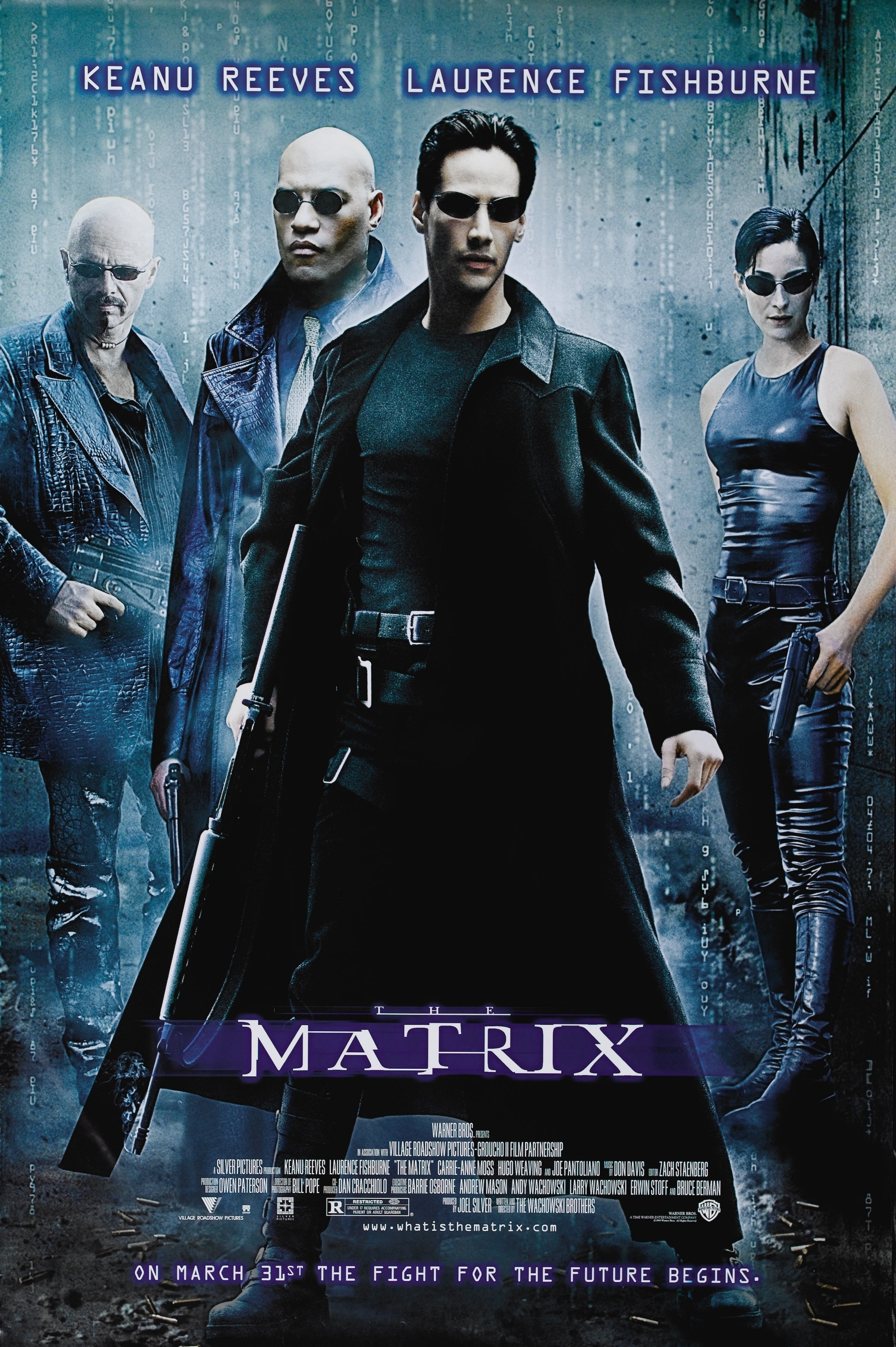
I won’t deny there was something very bold and fresh feeling about The Matrix when it was released 20 years ago. Unfortunately, some of that boldness has been eroded by time and the freshness has now been ground down into pulp by imitators and parodies. Still, the central concept behind the film – that the world as we know it is a simulation – is a strong enough one to pass muster all these years later. Despite some of its hokey flaws and horrid sequels, it’s easy to allow The Matrix its spot in the pantheon of science fiction on the strength of its ideas and groundbreaking special effects alone.
Remember if you will the year 1999. The concept of “cyberspace” was something the average American was still trying to wrap their head around and the Y2K disaster loomed just around the corner. In retrospect, it was the perfect year for a film like The Matrix to come out. Everyone knew what the internet and virtual reality were in theory, but their far-reaching implications were nowhere near developed. As a filmmaker, it was a wide-open frontier to explore. You could basically just make stuff up about it and no one would be the wiser. Of course, the downside of this approach is that 20 years later – or ten, or even five – your technology and futuristic predictions are likely to have aged very, very poorly.
But, putting all that aside, what else is The Matrix? At its core, it’s a Hong Kong-styled martial arts film in the vein of John Woo and Chang Cheh that uses a familiar “chosen one” plot device to tell the story of Neo (Keanu Reeves), a computer programmer destined to save humanity from the machines. Laurence Fishburne steps in as the guru/sensei Morpheus, who teaches Neo the ways of combat via computer programs implanted in his brain while dropping plenty of enigmatic bits of advice for all to pick up and contemplate.
In hindsight, this half-baked spiritualism seems rather cheesy, but that may be part of the fun. I like weighty sci-fi, but I also like it when it’s just for fun. The Matrix may have been meant as high-concept art (and maybe it was 20 years ago), but two decades later it plays more like a high-octane thrill-ride with some nonsense about fate, destinies, and prophecies crammed in for good measure. I have mixed feelings about “chosen one” stories, but with a film this packed with wild action and crazy stunts, what could a little hokum hurt?
Much of this vague nonsense is contrasted by Hugo Weaving’s devious and relentless Agent Smith – a computer programmed bounty hunter of sorts who will stop at nothing to eradicate the humans threatening his technological nightmare. Just listen to the subdued menace behind his voice every time he says “Mr. Anderson.” Weaving is equal parts threatening and condescending and easily the glue that holds the movie together. When a film relies as heavily on tropes The Matrix does, a rock-solid villain is more important than ever.
I would never have called The Matrix a great movie – upon its release or now – but its impact on FX and stunt departments has been massive. I have issues with the leather and latex “cyberpunk” look the film crams down our throats and the way Trinity (Carrie-Anne Moss) goes from unstoppable bad-ass to back row love interest with the snap of a finger but I’ll chalk the former up to being a product of the times and the latter as a disappointment found in 99% of movies. It’s a fun movie to watch for all kinds of reasons, with nostalgia for a long-lost decade being the primary one for me.
P.S. For a good laugh, pay attention to the size of Neo’s desktop computer. Then ask anyone under the age of 25 if they know what it is.

