
Film Review: Cries and Whispers (1972)
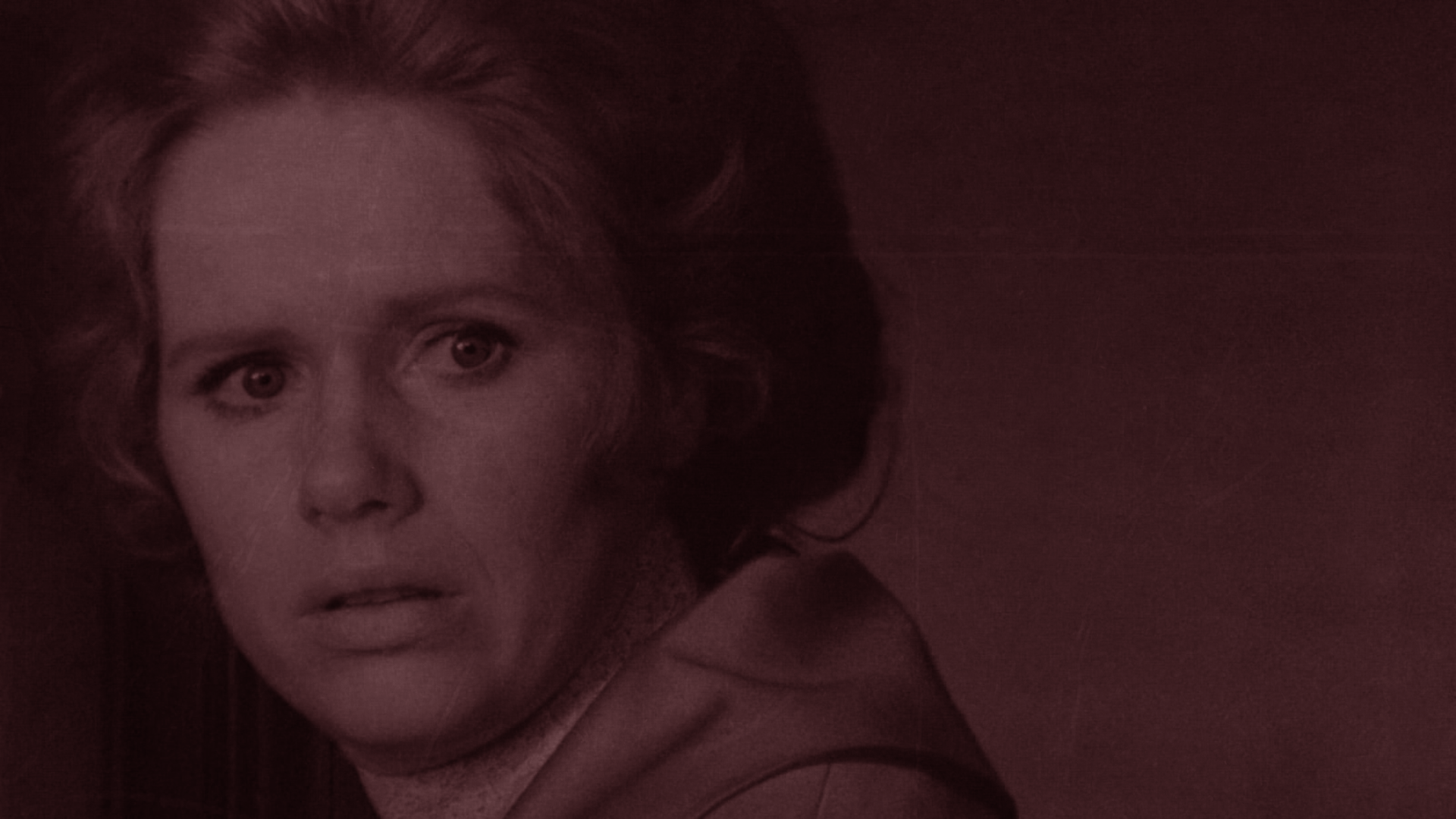
In Cries and Whispers, director Ingmar Bergman once again filters his atheistic beliefs through the lives of both the devout and those who only claim to be. For most of his career, Bergman seemed to hold a certain admiration for those capable of putting their faith in God, which was rivaled only by a self-flagellating disdain for those who couldn’t or wouldn’t. That Bergman was a lifelong nonbeliever (despite, or perhaps because of, his upbringing in a harsh and abusive Lutheran household) was possibly, in his mind anyway, a cause for punishment. Bergman’s artistic explorations of belief and nonbelief were central to his sense of self, and it’s within the red walls of Cries and Whispers that his doubt collides headfirst into the unwavering certainty of others in the saddest and most heartbreaking ways possible.
In an expansive yet confining manor in 19th-century Sweden, a woman lies in a bed inside her childhood home dying of cancer. The woman, Agnes (Harriet Andersson), who wails with pain at nearly every waking moment and is cared for by the household maid Anna (Kari Sylwan) who lovingly feeds, washes and comforts her. Agnes’ sisters, Maria and Karin (Liv Ullmann and Ingrid Thulin) are also present, but while they all take turns with Anna watching over their worsening sister, the pair remain distant, detached, and even cold.
There are men, too — the husbands of Maria and Karin (Henning Moritzen and Georg Årlin), along with a doctor and a priest (Erland Josephson and Anders Ek) — but their presence is largely inconsequential other than to help demonstrate the sins and idiosyncrasies of Maria and Karin. But, despite the sisters’ obvious hostility toward each other and their unwillingness to address whatever issues lie between them, it’s the women who appear to have their shit together, not the men. Bergman doesn’t seem to like or care much about the male half of the cast, as they are presented as weak, ineffectual, blind to the needs of others, and even cruel. His women, who are themselves nowhere near free of the same set of sins, are at least deliberate in their actions. The women may lack the niceties one might expect among sisters, but they act on instinct and self-preservation. The men act on emotion, impatience, shame, and conditioning.
With the exception of Anna the maid — who appears rather saintly, especially in comparison — nobody in Bergman’s insular world has much to offer anyone else except thinly-veiled contempt half-heartedly masked by transparent acts of what they think loving behavior is supposed to look like. But, one can’t help but wonder how these angry and distant women came to be as they are. Their sister Agnes doesn’t appear to have the same repellent hang-ups as Maria and Karin. It’s possible Agnes was spared whatever trauma her sisters experienced in their youth (an inciting event is hinted at but never explained or expounded upon), or perhaps her deeply-held religious faith better prepared her for the aftermath of whatever happened to them.
Bergman’s women are each in their own ways tormented, but it’s not the director’s intention to revel in their downfall. He’s much more interested in using their complexities to demonstrate both the greatness and the weakness found in all people, an enterprise he achieves with a striking amount of beauty and emotion. The ultimate cruelty is that he chose the kind and pious Agnes to be the one to suffer and die at the hands of a relentless cancer while her sisters are allowed to continue on with their bitter and hostile lives. But the hate inside Maria and Karin is an all-consuming form of cancer as well — a malignancy that ruthlessly spreads outward from them, infecting all they come into contact with. By the end of the film, I can’t help but wonder who has suffered the most — the living or the dead.

Criterion Special Features Include
- New 2K digital restoration, with uncompressed monaural soundtrack
- Introduction by director Ingmar Bergman from 2001
- New interview with actor Harriet Andersson, conducted by historian Peter Cowie
- On Solace, a new video essay by filmmaker :: kogonada
- Behind-the-scenes footage with commentary by Cowie
- Ingmar Bergman: Reflections on Life, Death, and Love with Erland Josephson (2000), a fifty-two-minute interview with Bergman and his longtime collaborator
- Trailer
- New English subtitle translation
- Optional English-dubbed soundtrack
- PLUS: An essay by film scholar Emma Wilson
