
Film Review: Hundreds of Beavers (2024)
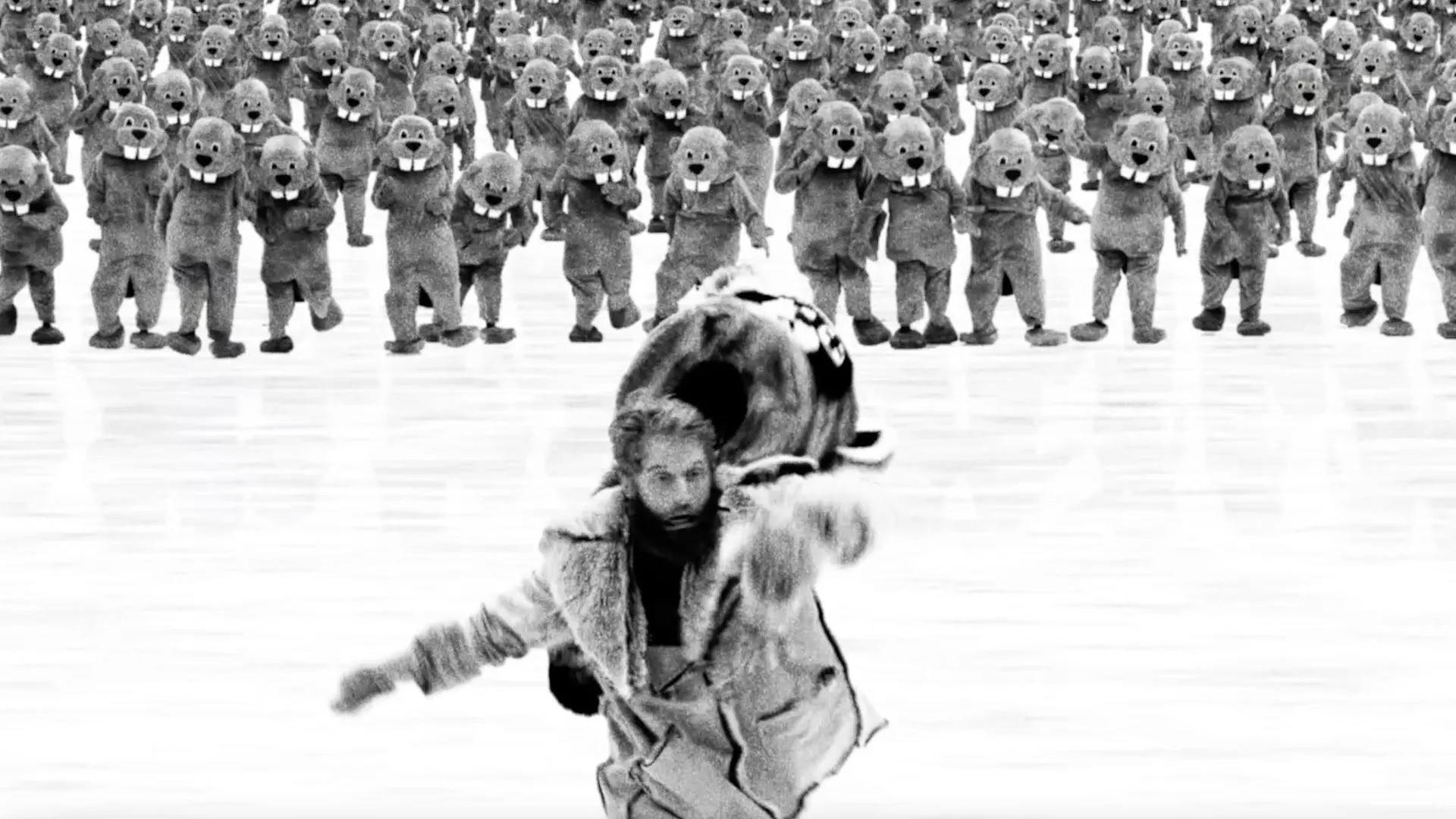
You don’t see many movies like Mike Cheslik’s Hundreds of Beavers anymore—and by “anymore,” I mean in the last 90 years or so. But, as raucous silent-ish slapstick comedies with heavy nods to German Expressionism and Looney Tunes go, I dare say you won’t find much better. This infectiously funny film feels more like the result of a hedonistic whiskey binge that found Charlie Chaplin, Terry Gilliam, and Tex Avery stranded in the woods together with only a pack of pencils and a ream of paper to their names than it does something any sane person of our 21st century would write and direct. And if you don’t believe me, I urge you to watch Hundreds of Beavers and tell me I’m wrong.
This nearly silent and completely outlandish affair (sound effects are used to comedic effect, but there is no dialogue other than grunts and outbursts of elation to be heard) takes place in a slightly anachronistic version of the untamed 19th-century North American wilderness, in which a drunken applejack salesman named Jean Kayak (Ryland Tews) unexpectedly finds himself lost in the vast forest, alone, cold, and hungry. As his battles with the elements and rowdy wildlife grow increasingly cartoonish, so too do his crackpot schemes for dealing with them.
Things change for Jean when he stumbles on a fur trading outpost owned by a stickler old man (Doug Mancheski) who lives there alone with his lonely and lovely daughter (Olivia Graves). Naturally, Jean falls desperately in love with the young woman and vows to do whatever it takes to gain her father’s permission to court her. The protective man’s stipulation for allowing Jean to see his daughter? He must prove himself by trapping hundreds of beavers.
At its heart, Hundreds of Beavers is not dissimilar to the story of Hercules and his twelve labors, but instead of nasty horse stables and many-headed serpents, we get a man trying to kill angry human-sized beavers (actors in fluffy giant mascot costumes) who diligently enact their plans of world dominance through extravagant damn building. It’s insane, and that this wholly out-of-vogue cinematic format works as well as it does is a testament to the dedication of everyone involved, especially the comedic stylings of the cast and the fantastic photography by cinematographer Quinn Hester.
The downside of this energetic and unhinged ode to the silent comedy filmmaking of a century ago is that its 108-minute runtime is a bit long to sustain the joke. Granted, its imagination and innovative ways of skirting a low budget are entertaining throughout, but I can’t help but wonder if shaving twenty minutes might keep audiences—especially ones with no love or only minimal knowledge of the silent era—more engaged for the duration. After all, there are only so many ways to skin a beaver, let alone hundreds of them. Still, even if the shine eventually wears off for you, as it did for me, Hundreds of Beavers remains a hilarious romp through a surreal world of creative ingenuity and the lost art of physical comedy.

