
Film Review: Come and See (1985)


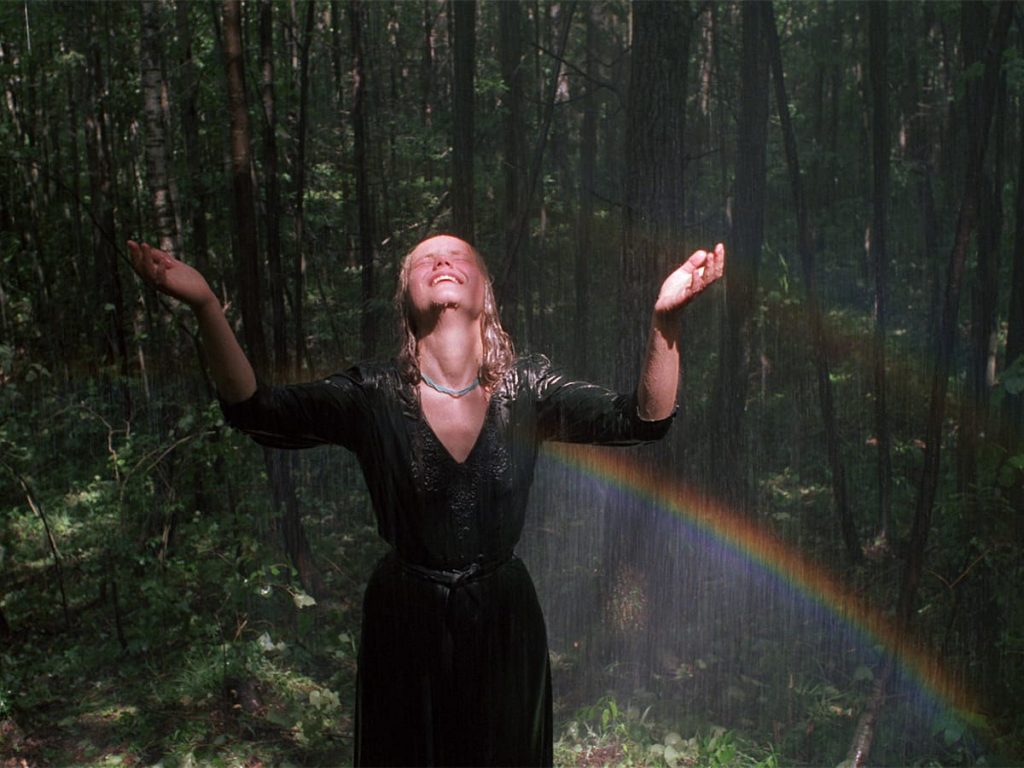
I cannot in good conscience recommend Russian director Elem Klimov’s Come and See to anyone—even though I think it’s one of the best films I’ve ever seen, and one of the most important. It’s an extremely difficult film to watch, and one that will stick with you for some time. Come and See is very nearly an exercise in psychological torture—it’s that devastating. It’s far more terrifying than any so-called “horror” film simply because the events depicted actually happened. It plays out horror in its purest form. There are no hulking killers lurking in shadows. No zombies or vampires or any other creatures. There is only man’s capacity to commit atrocities—and the fear and chaos captured on screen is the true stuff of nightmares. It’s a surreal experience, captured methodically and presented wholly in reality.
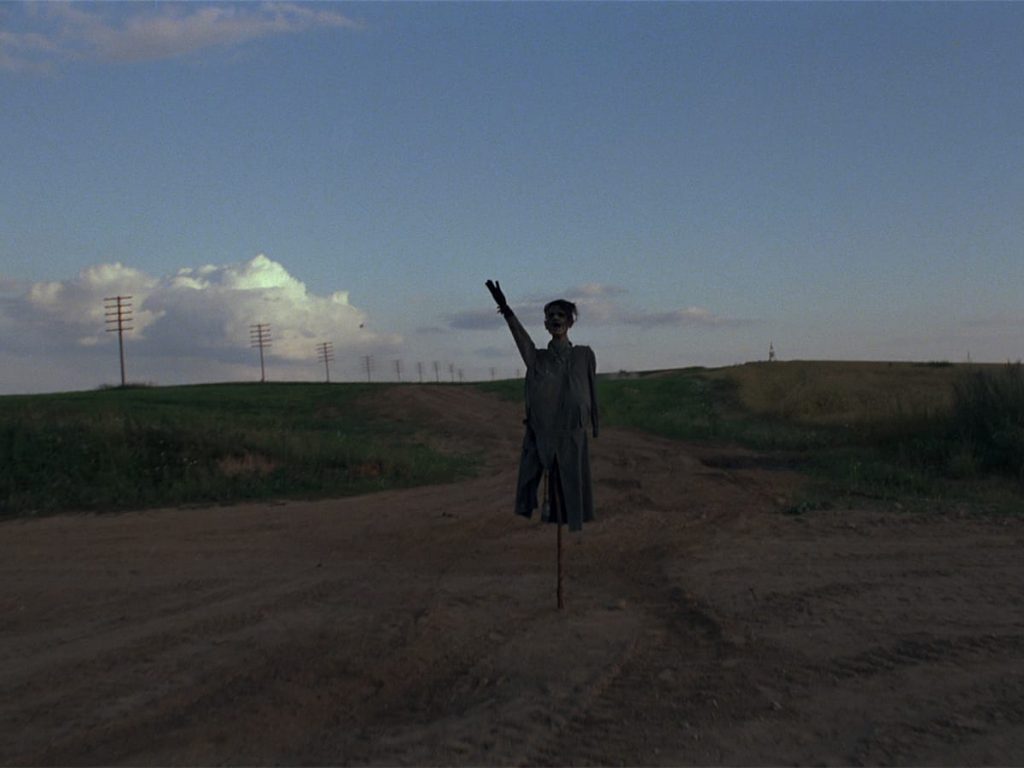
I knew I was in for a difficult experience before I started. I had been warned, but still found myself unprepared. Set in 1943 during the German occupation of Byelorussia (modern-day Belarus), Come and See follows Florya (Aleksey Kravchenko), a boy of around fourteen. He wants to join the partisans and help fight the Nazis, which is against his family’s wishes. He’s conscripted anyway and soon finds himself in the forest performing menial tasks for the regiment. Soon the partisan force moves on but leaves Florya behind. He’s upset but is comforted by Glasha (Olga Mironova), a girl he meets at the camp. When the camp is suddenly bombed and the forest invaded by German paratroopers, Florya and Glasha flee back to Florya’s village. This is where the horror begins—and it doesn’t stop until the film is over.
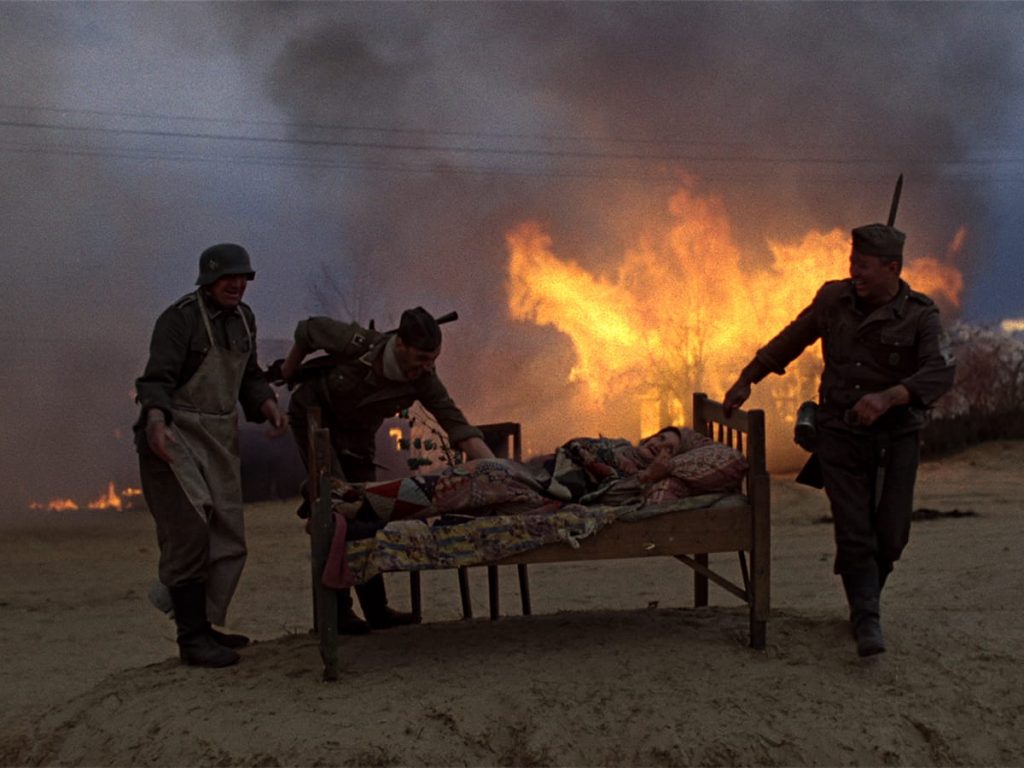
I am choosing not to describe the horrors depicted. This has nothing to do with spoilers, it has to do with their impact. I could not do them justice—they should be experienced. I should point out that, in contrast to how many war films or horror movies achieve their emotional impact, Come and See has almost no blood or gore. Its impact is achieved through pure tension. It has a nightmare quality that is real and understandable, yet somehow ethereal and not of this world. Florya moves through the chaos in utter disbelief of it—at first with optimism (perhaps choosing not to see things), and then with pure rage, hatred, and vengeance.
The film was co-written by Klimov and Ales Adamovich, who was a survivor of the occupation. It is a retelling of his experiences. It was produced in Russia in honor of the 40th anniversary of the Soviet victory over the Nazis in World War II but serves as an indictment on man’s capacity for brutality, and his ability to commit atrocities. Klimov wrote of Come and See:
“I understood that this would be a very brutal film and that it was unlikely that people would be able to watch it.”
To which his co-writer Ales Adamovich replied:
“Let them not watch it, then. This is something we must leave after us. As evidence of war, and as a plea for peace.”
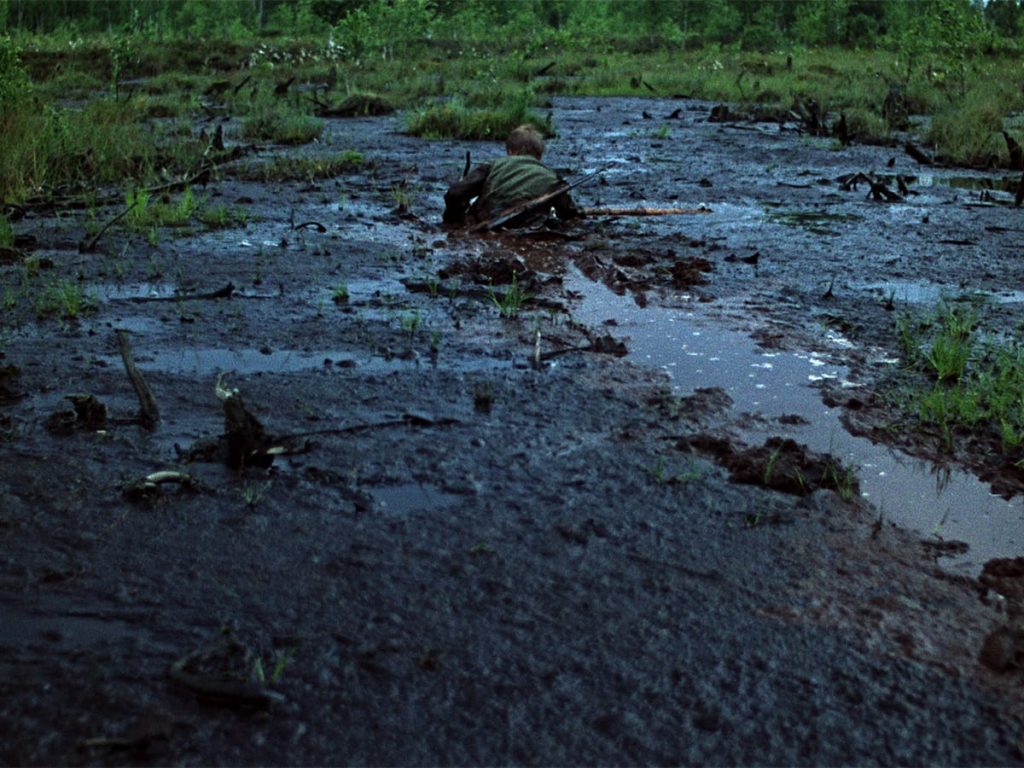
It is a plea for peace, but I found myself with other thoughts as well. Through Klimov’s lens and Kravchenko’s acting, we witness first-hand the genocide committed in Byelorussia, but the crimes can teach us something of ourselves and of our capacities as well. Near the end of the film, I was surprised to find myself wanting not simply justice, but revenge. I wanted these men to pay for what they had done. Even more shocking was I felt that had I been in there, had I witnessed these horrific crimes, I could have carried out this vengeance myself, without hesitation. Do we all possess this capacity for killing? I think the film is asking us this very question.
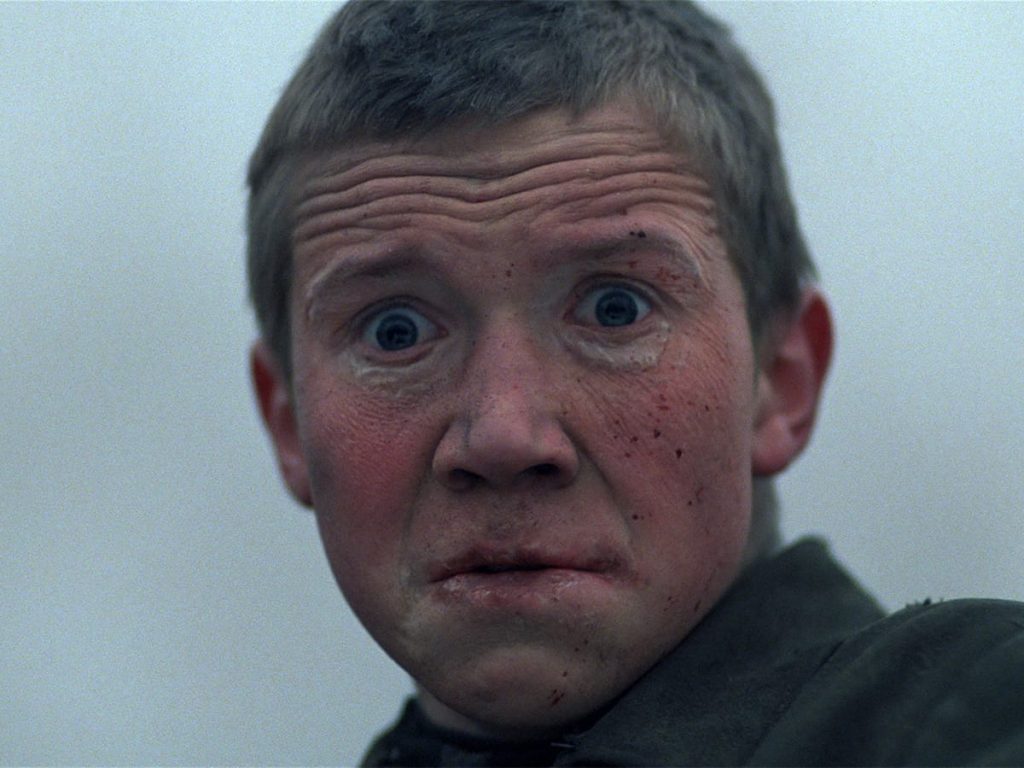
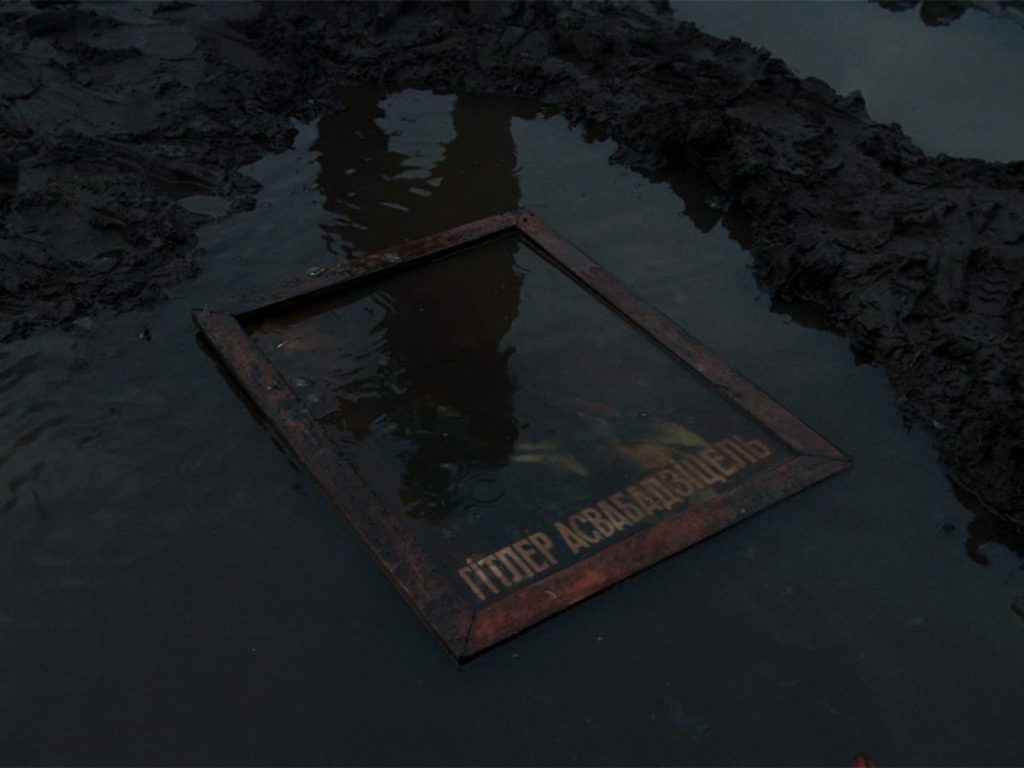
The final scenes are some of the best and prolific you’re likely to see. A German officer explains why the children must be killed, followed shortly by a sequence that at first seems out of place. Florya, while staring at a poster of “Hitler, Liberator,” begins to see the war in reverse. Time goes backward until he sees Hitler as a baby. What he does next (or more accurately, what he doesn’t do) is a testament to his humanity and serves to directly contrast Fascism and the Nazi order. Kravchenko’s performance is truly heart-wrenching. He travels from a fresh-faced and eager boy to a war-weary man in a very short time. He’s aged by the process. By the end, he’s hardly recognizable as the same person. His expressions of fear and confusion are haunting and disturbing, and they will stay with you.
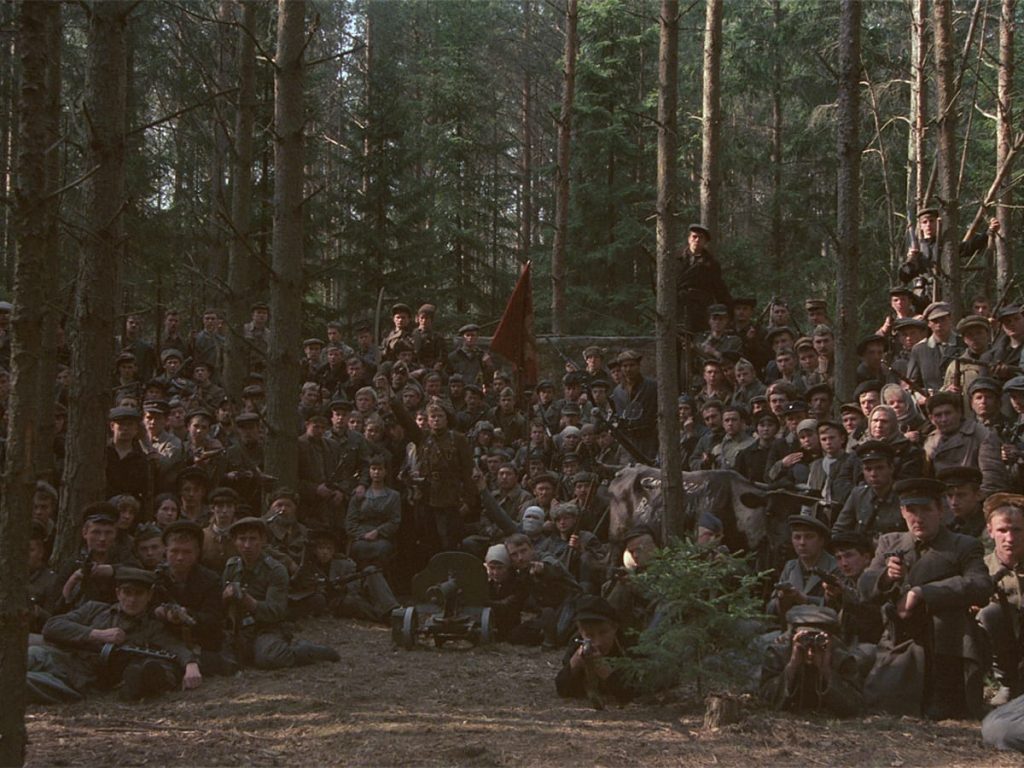
I won’t compare Come and See to other films about atrocities, Nazi or otherwise, because I feel that it is wrong to compare atrocities at all. Evil is evil. That these types of crimes exist or have ever existed, should anger you beyond belief—and if not, I question your character. It’s said that you can’t make a truly anti-war film because the depiction of war is in itself a glorification of it. This is true for 99.9% of Come and See. It’s in the very last shot of the film, however, that this becomes false. The partisans must fight on because they’ve seen first-hand what fascism is capable of. They’ve been left with little choice. The film ends on a note of optimism, which is a relief after all we’ve been through. But it should also serve as a warning. Today, right here, right now in America and across the globe, groups are organizing and legislation is being passed. The same groups and the same legislation that led to these horrors in the first place. That’s the scariest part.
Soviet Union • 1985 • 142 minutes • Color • 1.37:1 • Russian, German • Spine #1035
Criterion Special Features Include
- New 2K digital restoration, with uncompressed monaural soundtrack on the Blu-ray
- New interview with cinematographer Roger Deakins
- New interview with director Elem Klimov’s brother and frequent collaborator German Klimov
- Three 1975 films from Flaming Memory, a documentary series by Viktor Dashuk featuring firsthand accounts of survivors of the genocide during World War II in what is now known as Belarus
- Interview from 2001 with Elem Klimov
- Interviews from 2001 with actor Alexei Kravchenko and production designer Viktor Petrov
- The Story of the Film “Come and See,” a 1985 short film featuring interviews with Klimov, Kravchenko, and writer Ales Adamovich
- Theatrical rerelease trailer
- PLUS Essays by critic Mark Le Fanu and poet Valzhyna Mort
