
Film Review: Vampyr (1932)
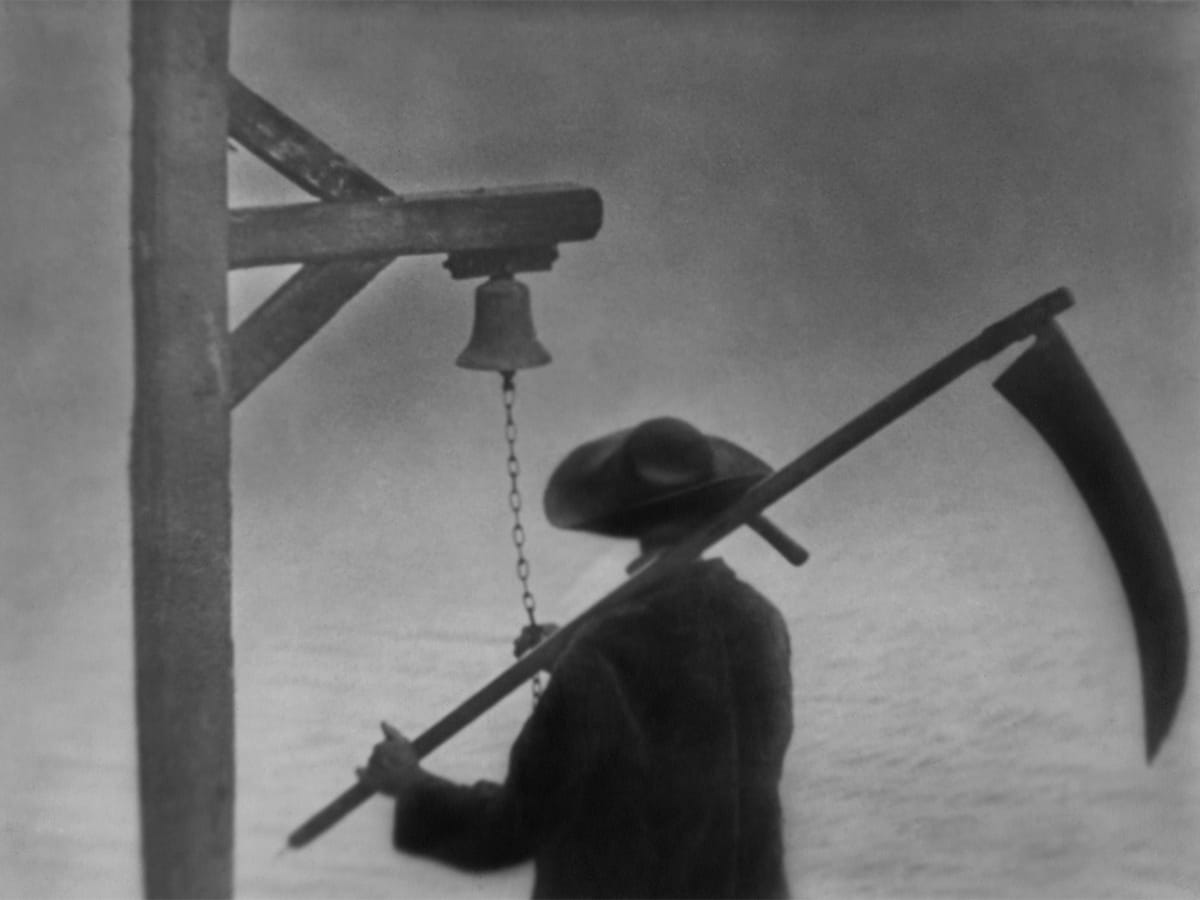
While watching Carl Theodor Dreyer’s 1932 horror masterpiece Vampyr, a few things began to dawn on me. First was that the film’s protagonist Allan Gray (played by Nicolas de Gunzburg) bore a striking resemblance to the influential horror writer (perhaps the influential horror writer, if you ask anyone in the game) H.P. Lovecraft. Second was that, while not featuring any classic Lovecraftian Mythos deities such as Azathoth, Nyarlathotep, Yog-Sothoth, or Cthulhu, Vampyr better followed the plotting, pacing, tone, and general atmosphere of Lovecraft’s writing better than any movie I can recall.
This realization led me to an important question that needed immediate answers: Was Dreyer a fan of Lovecraft’s work? And, less important from a film analysis standpoint but oh-so fascinating to the lifelong Lovecraft fanatic in me: What did Lovecraft think of Dreyer’s film? The two men were creating their genre-defining pieces of art during at the same time after all (the mid-1920s until his death in 1937 was Lovecraft’s most prolific period). There had to be a crossover. One had to influence the other. They just had to, right?
As it turns out, no they didn’t. There is no evidence that either was familiar with the other’s work. Learning this, I felt a bit crestfallen, but there is one tidbit in all of this that puts a smile on my face. According to Lovecraft’s letters (he was an extensive letter writer during his life, corresponding with all manner of other writers of weird fiction, fantasy, and horror) he did see Bela Lugosi in Tod Browning’s 1931 production of Dracula – and predictably hated it. More importantly, though, he had a lot to say about Irish author Sheridan Le Fanu’s 1872 short story collection In a Glass Darkly, the anthology book that served as the source material for Vampyr. And true to Lovecraft’s grumpy and judgmental demeanor, he absolutely hated that too. Unfortunately, this slightly dubious connection is the only one I’ve been able to find that links Lovecraft and Dreyer. I suppose I’ll have to take what I can get where I can get it.
But, despite any obvious connection between the two artists, Vampyr remains a beautifully executed exercise in Lovecraftian storytelling. Its closeness in plotting to Lovecraft’s investigative short stories is undeniable. Without knowing it, Dreyer checked off nearly every box on the Lovecraft trope checklist and followed his formula nearly perfectly. Vampyr has it all: an occult researcher, a generations-old local conspiracy, a crumbling manor, dream prophecy, and the answers to it all found in old books in the library. The only thing missing is for the protagonist (who, once again, bears a striking resemblance to Lovecraft himself) to learn that his family gene pool carries a terrible secret before rambling off into insanity.
Putting the story elements aside for a moment, Vampyr also boasts some of the most beautiful and compelling cinematography of the 1930s. This should come as no surprise considering just four years earlier, Dreyer released The Passion of Joan of Arc, one of the most visually stunning films ever made. However, where Passion was considered a masterpiece immediately upon its release in 1928, Vampyr was largely panned. The reasons for this dismissal vary, but, thankfully, contemporary analysis has all but reversed the initial critical response, making Vampyr one of the most highly regarded early works of horror available.
And the reasons for this are clear. Dreyer’s use of shadow to create spooky and ethereal imagery is unparalleled. The mood he is able to convey is one of creeping nightmarish dread, as Allan Gray meanders about the property, interacting with the locals (played with plenty of verve by Maurice Schutz, Rena Mandel, Sybille Schmitz, Jan Hieronimko, and Henriette Gérard) and taking in the supernatural sights one by one. Yes, it is a bit confusing, but I believe that’s the point. Allan doesn’t understand what is happening or what he’s seeing – he has no explanation for the random shadow dances occurring around him or the visions he is presented with – but he wants to, and so do we. He is an occult investigator after all, and it seems he’s hit the motherlode
Regardless of the possibly confusing dream logic (I maintain that it’s only confusing to 1930s film critics), Vampyr is a visual treat in the purest sense. Every scene holds a secret and every frame is a masterwork of pure gothic artistry. If you’re looking for the standard and played-out story about a rich sad-boy incel living alone in a castle on a mountain, you’ve come to the wrong place. Vampyr wisely and purposefully eschews romance in favor of good old-fashioned folk horror and an unbeatable atmosphere.

Denmark • 1932 • 73 minutes • Black & White • 1:19:1 • German • Spine #437
Criterion Special Features Include
- High-definition digital transfer of the original German-language version of the film from the 1998 restoration by Martin Koerber and the Cineteca di Bologna, with uncompressed monaural soundtrack
- Alternate version with English text
- Audio commentary from 2008 featuring film scholar Tony Rayns
- Carl Th. Dreyer, a 1966 documentary by Jørgen Roos chronicling Dreyer’s career
- Video essay by scholar Casper Tybjerg on Dreyer’s influences in creating Vampyr
- Radio broadcast from 1958 of Dreyer reading an essay about filmmaking
- PLUS: An essay by critic Mark Le Fanu and an essay by Kim Newman; a piece by Koerber on the restoration; a 1964 interview with producer and actor Nicolas de Gunzburg; Dreyer and Christen Jul’s original screenplay and Sheridan Le Fanu’s 1872 story “Carmilla,” a source for the film
