
All My Records: Patti Smith Group “Easter”
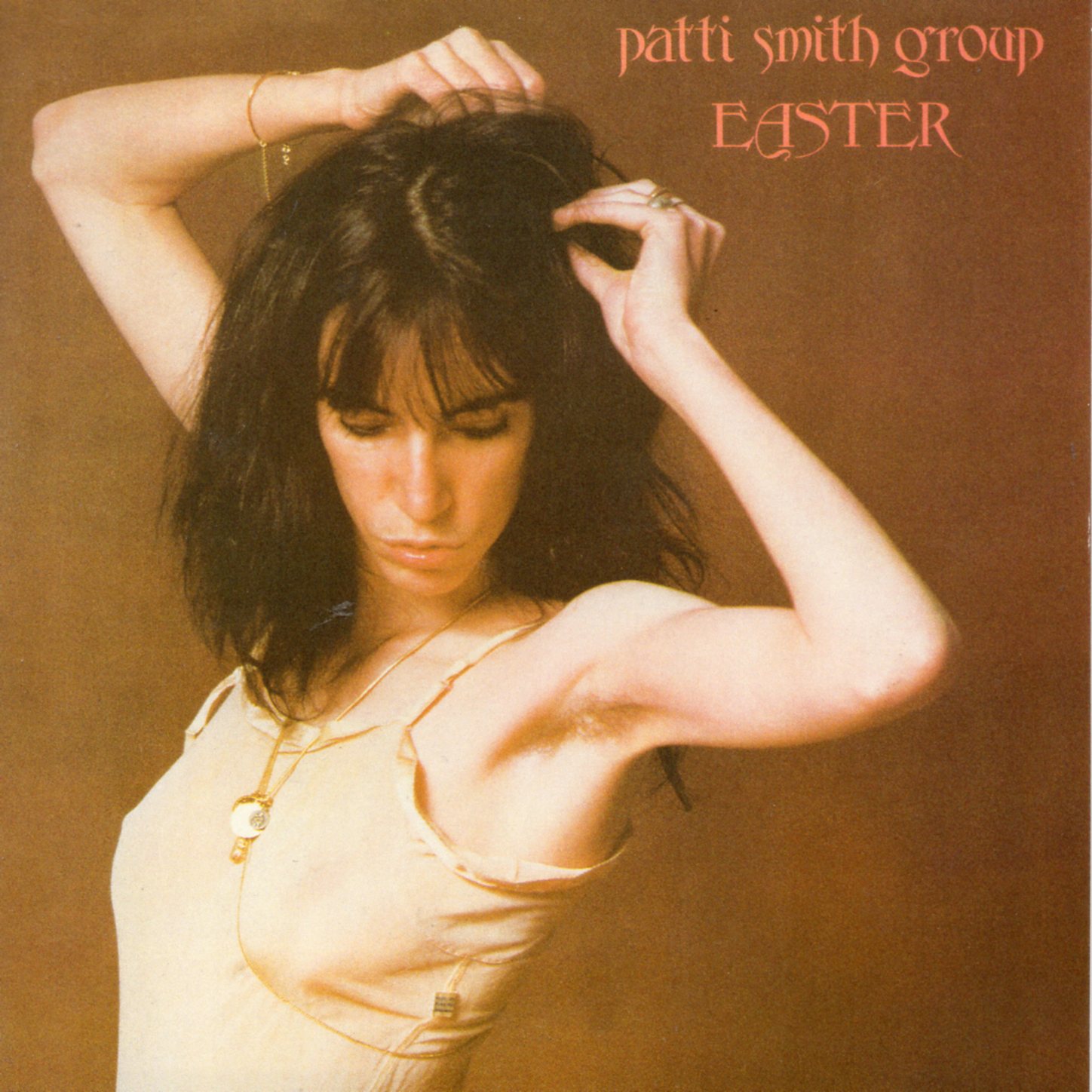

I’ll admit don’t know much about Patti Smith. She is, I’ve read, considered the “God-Mother of Punk,” whatever that means. I have a lot of strong opinions about the origins of punk, who and what should be considered punk, and the like, opinions that have formulated from years of direct observation and research. I’ll save those opinions for another article. Right now I’d like to discuss a particular track from this record, its meaning, its intention, and its place in the world, then, when it came out in 1978, and now.
The song, of course, is Rock N Roll Nigger.
Now, in full disclosure, I am a white male. I cannot and will not pretend to fully understand what it is like to be black or African American, or what it was like for a woman breaking into the art/music scene in the 1960s and 70s, or even today. Additionally, I don’t have any grand solutions to any of the problems that some of the themes brought up here may cause, or be a product of (i.e. white privilege, cultural appropriation, among others). However, as a 25-year vet of the punk scene, along with the anti-racism, anti-sexism, anti-homophobia, etc. that goes with that, I think this song and its lyrics warrant some discussion. I’m frankly surprised at the lack of discussion I’ve found about it online. Going into this I thought I’d find a treasure trove of articles, analysis, and critiques of the song. I didn’t. So, I guess I’ll add my two cents to this surprisingly thin covered subject (if I’ve missed something, please let me know, I’d really like to know what others think of the song and its lyrics).
I’m not going to print the lyrics here. I’ll leave it up to you to listen to the song or look them up on your own, but I’ll say that it’s pretty strong stuff for a white lady to be screaming about.

I’m a bit surprised (am I?) that there wasn’t a backlash to this song upon its release.
For the record, I don’t believe Patti Smith to be a racist. Deliberately controversial, sure. Naïve, most likely. Racist, probably not. The intent of the song, as I understand it, is to declare herself as an outsider. She has no desire to live within the norms of society, and in doing so, likens her struggle with societal constructs to the struggles of African Americans, who also, according to Smith, live “outside of society.”
This is where my gripe with the song occurs, and it has nothing to do with the offensive choice of words. It has to do with this comparison itself. Self-identifying as an outsider does not put you on par with the struggles of an entire people. Sorry, but it doesn’t.
The African American community as a whole doesn’t live “outside of society” because they choose to, as Smith has, they have been placed there by a very systematic and long-lasting structure of white power, dominance, fear, violence, and countless other forms of oppression.
In fact, I would argue that POC communities live very much inside society, a society where their place has been very carefully orchestrated and defined over many centuries. Everyone’s place in society is deliberately planned and maintained by those in power. This system was created in order to justify slavery and the extermination of Native Americans, not as a means to oppress Jackson Pollack.
I find Smith’s comparisons arrogant and naïve.
You don’t get to be marginalized just because you want to be, especially when that so-called marginalization is proclaimed on a major label release featuring a song co-written by Bruce Springsteen. As I said at the beginning of this article, I don’t know a lot about Patti Smith, but I suspect that she knows very little, if anything, of oppression or actual struggle. As a white, straight male living in the United States, I’m not claiming to either, but that’s just the point, you probably shouldn’t claim to. If you don’t know, then maybe you should shut up. Otherwise, you come off as a know-it-all dick. Maybe there isn’t much discussion about this song simply because it’s kind of a dumb song, and most people can see right through Smith’s bullshit comparisons.
Another reason for the lack of analysis may be because I imagine the song is justified by folks who also long to live a counter-culture, bohemian life of the mind. Perhaps this song is a call to arms for white artist types. The kind that says they don’t see color but lock the car doors when POC walks by. You know the type. “Hey, I know what it’s like to struggle. I’m an artist!”
Well, that doesn’t fly with me. There are millions who actually struggle every day, who actually go hungry, and who actually don’t give a fuck about your art. They’d rather do what they’ve got to do to get by in this rigged system than give a shit about a bunch of white people whining about their lot in life.
There are also a lot more radical artists out there than Patti Smith. Google them.
Let’s be blunt. Patti Smith’s race allowed her to be an artist. She didn’t grow up a snotty rich kid, but she and many others’ bohemian lifestyles were ones of choice and were made possible by the color of their skin. I am also guilty of this. It’s a hard pill to swallow.
As I’m sure you know, this is called White Privilege, a term that had yet to be coined back in 1978 when Easter was released, but one you hear a lot about now, and it’s very relevant to this topic.
I’ll say this now; white privilege is a real thing. Get used to hearing it, acknowledge it, come to terms with it. If you are white, you have benefited from the white power structure that I mentioned above. You benefit from it every single day. It’s simply a fact.

As a woman of her time, I’m sure Smith did have battles. This I do not doubt. Being a strong woman in the ’60s and ’70s (or any time for that matter) was no easy feat, I’m sure. She did kick some ass and break some ground for women in the industry, and from a strictly musical standpoint this song is a rocker, but I can’t justify its existence. I don’t find it offensive, it’s too dumb for that. In fact, if you were to strip away the shock value, all you’d be left with would be a slightly above average rock song.
As for the rest of the album? It’s all right for a major label release featuring a song co-written by Bruce Springsteen.
