
Film Review: Universal Language (2025)
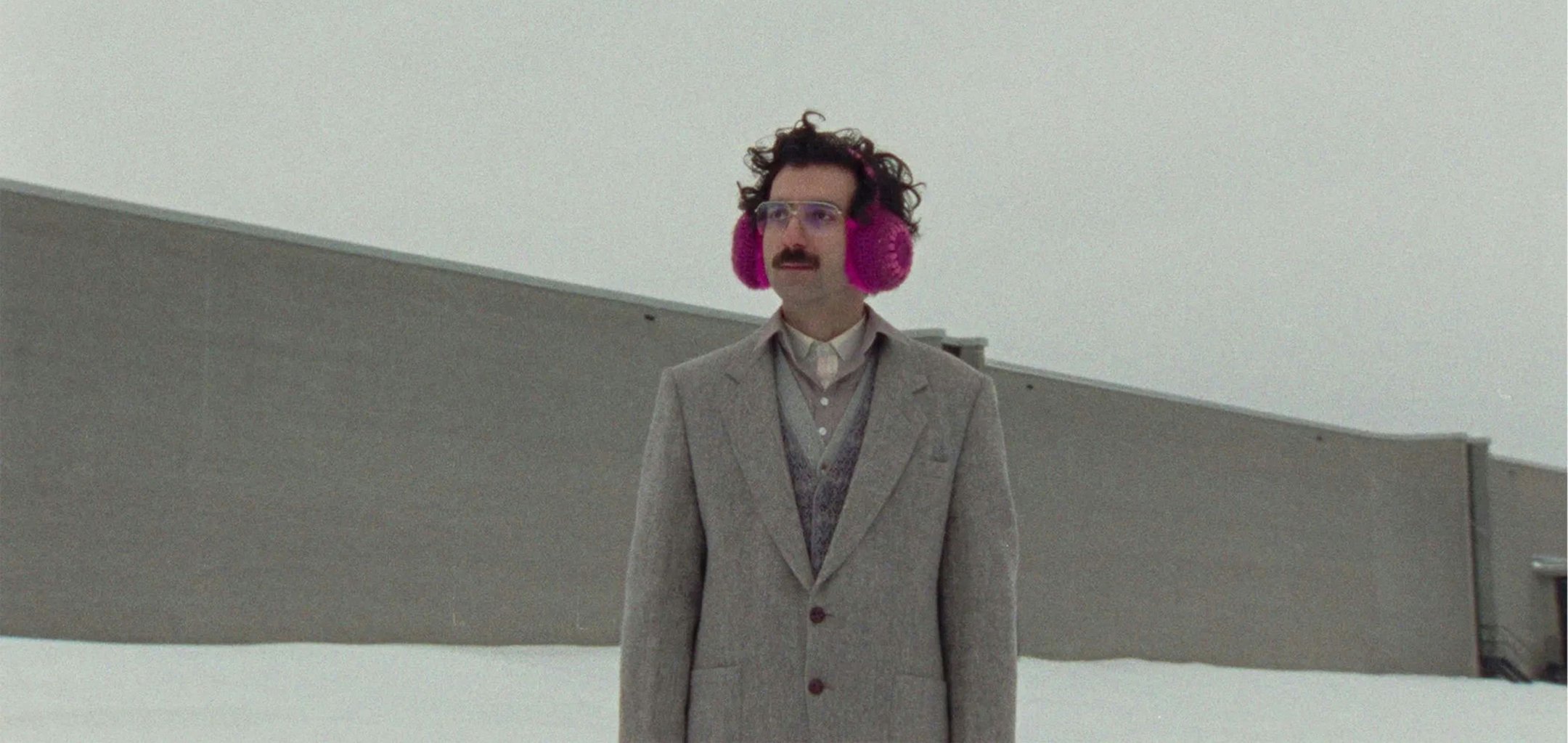
A pair of young girls find a stash of money frozen in the ice. A tour guide gives puzzling tours of Winnipeg’s sites and history. A low-level government official quits his job and travels home to see his mother. When you add these three disparate stories together (and throw in a heavy dose of friendly absurdism for good measure), the strange world of Matthew Rankin’s Universal Language starts to take shape. Or, that is to say, it takes shape in only the way truly existential examinations of life’s mundanity can. As these colorful groups of characters (Rojina Esmaeili, Saba Vahedyousefi, Pirouz Nemati, and Rankin himself) slowly, and slightly confusingly, come together to explain Rankin’s comically distorted vision of Canadian life, a truly unique film emerges – one that promises to delight and sadden in equal measure.
Whether or not you find Rankin’s ice-covered and slush-ridden film as aesthetically beautiful as I do is of course subjective. This kind of thing is always a matter of perspective, but for someone like me who grew up just four hours south of the film’s Winnipeg setting (and someone who has been living in either Florida or North Carolina for over twenty years now), I personally find the dirty snow, the visible breath, and other cold weather trappings nostalgic and endearing. Where others see only harshness and inconvenience, I see the reality of my youth, and can easily remember how no one thought about the long, cold winter months in this way. They just “were.” But then again, whenever I rewatch Fargo, I find myself inwardly boasting, “Behold the enchanting majesty of the Minnesota prairie in winter!” (Do only we Northerners truly see it this way?)
But, putting climate-related aesthetics aside, Universal Language is exactly the kind of film I would recommend for Wes Anderson fans looking to branch out into the vastness of world cinema. Along with some symmetrical slant and ironic quirkiness borrowed from Anderson, Rankin’s sarcasm and the sometimes-present callousness of his characters can be traced to the Coen brothers (also Minnesota natives – there’s that frozen beauty again). In the wandering and nomadic nature of his narrative, I see shades of early Richard Linklater films like Slacker, in which 20-somethings in Austin, Texas meander about, casually running into each other and holding long, rambling existential conversations about everything under the sun.
Make no mistake, though Rankin doesn’t ape his predecessors. He simply allows their influence to seep into his own vision in increasingly creative ways. After all, would Anderson, the Coens, or Linklater ever have the nerve to base their film on the farcical notion that, rather than English, Persian is the official language of Canada (but still with a fair bit of French)? This radical assertion alone sets Rankin apart from both his contemporaries and the iconoclasts who came before him. In the hands of a less inventive director, this linguistic choice alone would be the film’s entire premise, forcing upon us some contrived political messaging. But Rankin doesn’t dwell on his choice of language and neither do his characters. As my Minnesota winters just “were,” his Persian just “is.” And Universal Language is all the better for it.

